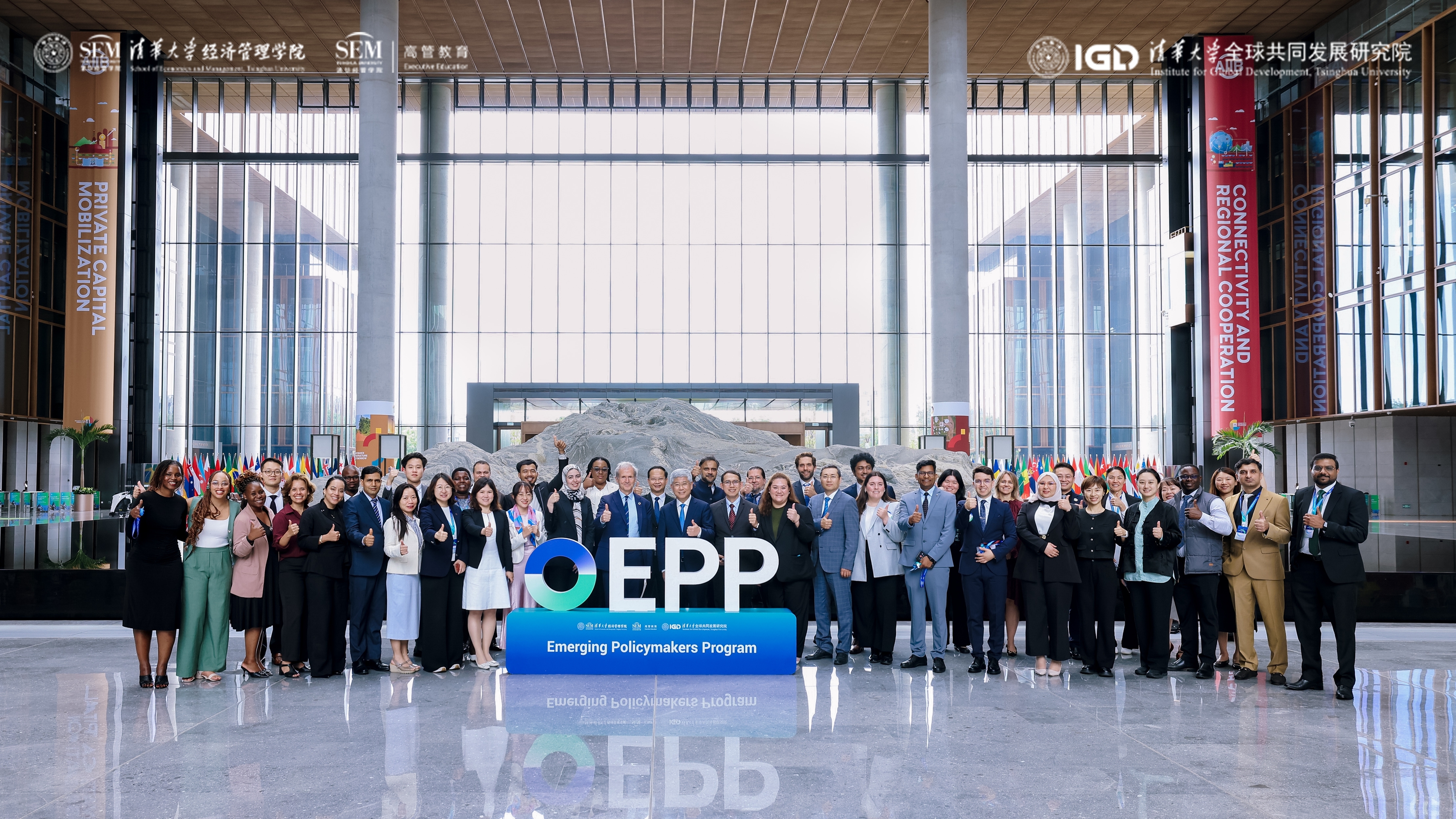
The 2026 Cohort of Emerging Policymakers Program
The School of Economics and Management at Tsinghua University (Tsinghua SEM) and the Asian Infrastructure Investment Bank (AIIB) officially launched the 2026 cohort of the Emerging Policymakers Program (EPP) at the AIIB headquarters in Beijing on May 22, 2026. The program brings together 40 early-career government officials from 27 emerging and developing economies across Asia, Africa, and Latin America for an intensive three-month capacity-building initiative focused on climate policy, green infrastructure, and sustainable development. The cohort represents an exceptional group of rising professionals: 60% come from government ministries and agencies, 75% hold master's degrees, and the program has achieved a perfect 50-50 gender balance among participants.
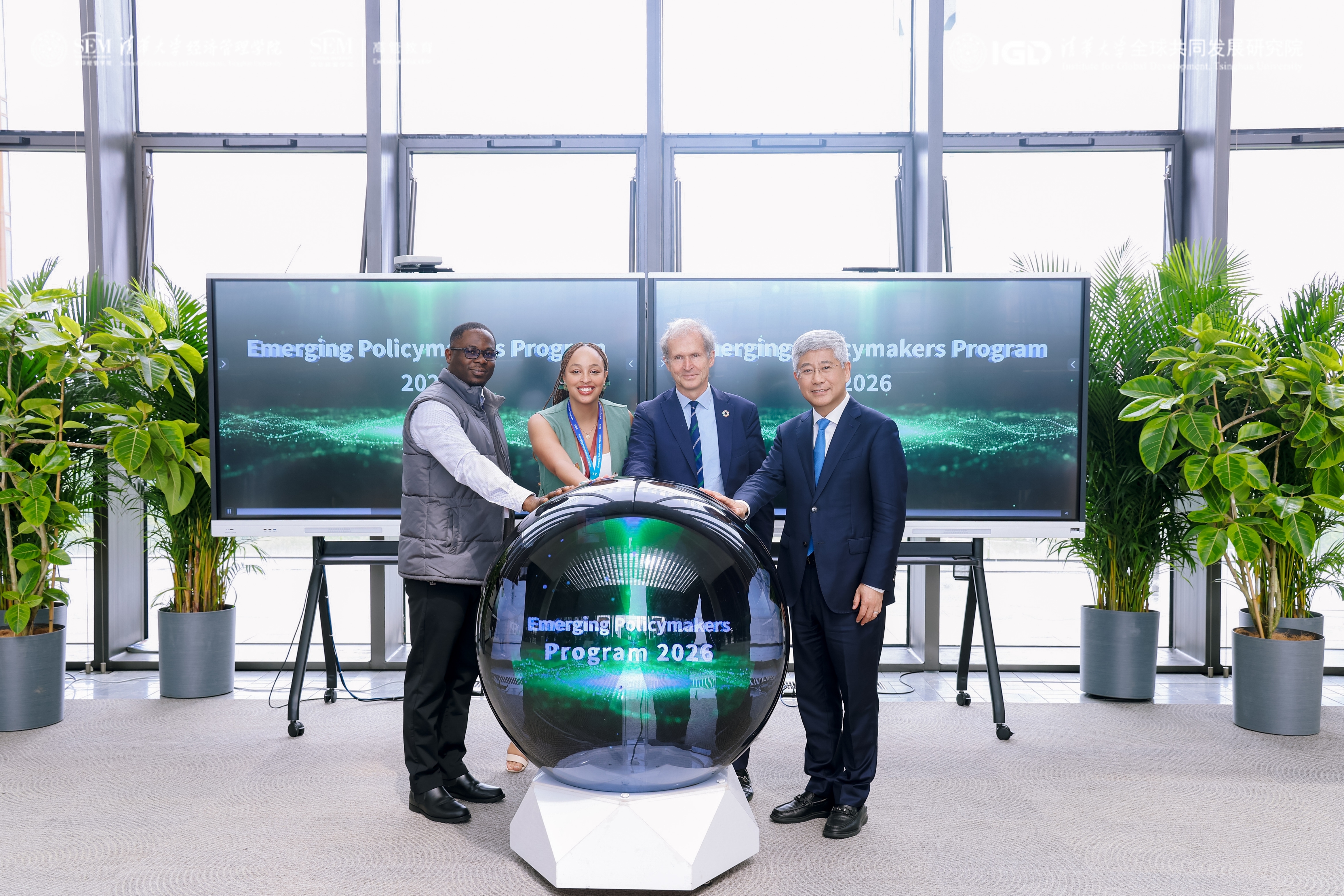
EPP 2026 is launched in the AIIB headquarters in Beijing, May 22, 2026.
The launch ceremony featured remarks by Professor Bai Chong-En, dean of Tsinghua SEM and Executive Dean of Institute for Global Development, AIIB Chief Economist Erik Berglof, and two representatives of the 2026 cohort who shared their personal motivations and professional aspirations for joining the program.
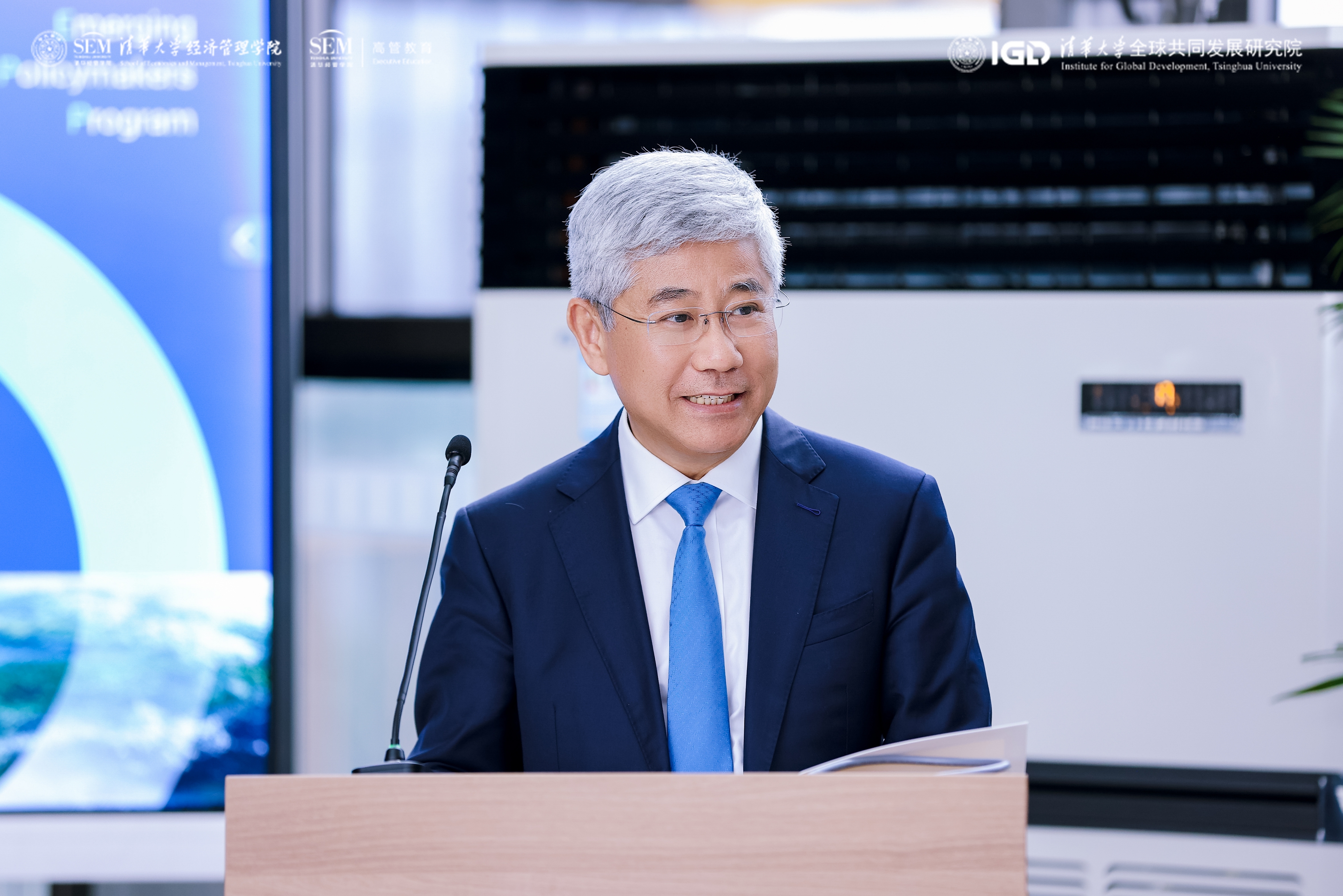
Bai Chong-En delivers a welcome speech at the launch ceremony of 2026 EPP, May 22, 2026.
In his address, Dean Bai Chong-En welcomed the 2026 cohort and outlined three hopes for participants during their time in the program. "First, I hope it deepens your understanding of the climate challenge – not only as an environmental issue, but as an economic, social and political imperative," he stated. "Through the lenses of policy, finance and technology, you will develop the multidimensional thinking that effective climate leadership demands."
Bai's second hope centered on building lasting professional connections: "The relationships you form here - with your fellow participants, with faculty, with our institutional partners – will become a global network of collaborators united by a common purpose. You will learn as much from each other as from any lecture or case study.
In addition, Bai said: "I hope each of you returns home as a changemaker - equipped with new knowledge, new tools, and new partnerships. The world does not need passive observers. It needs engaged leaders who can translate insight into action, and action into impact."
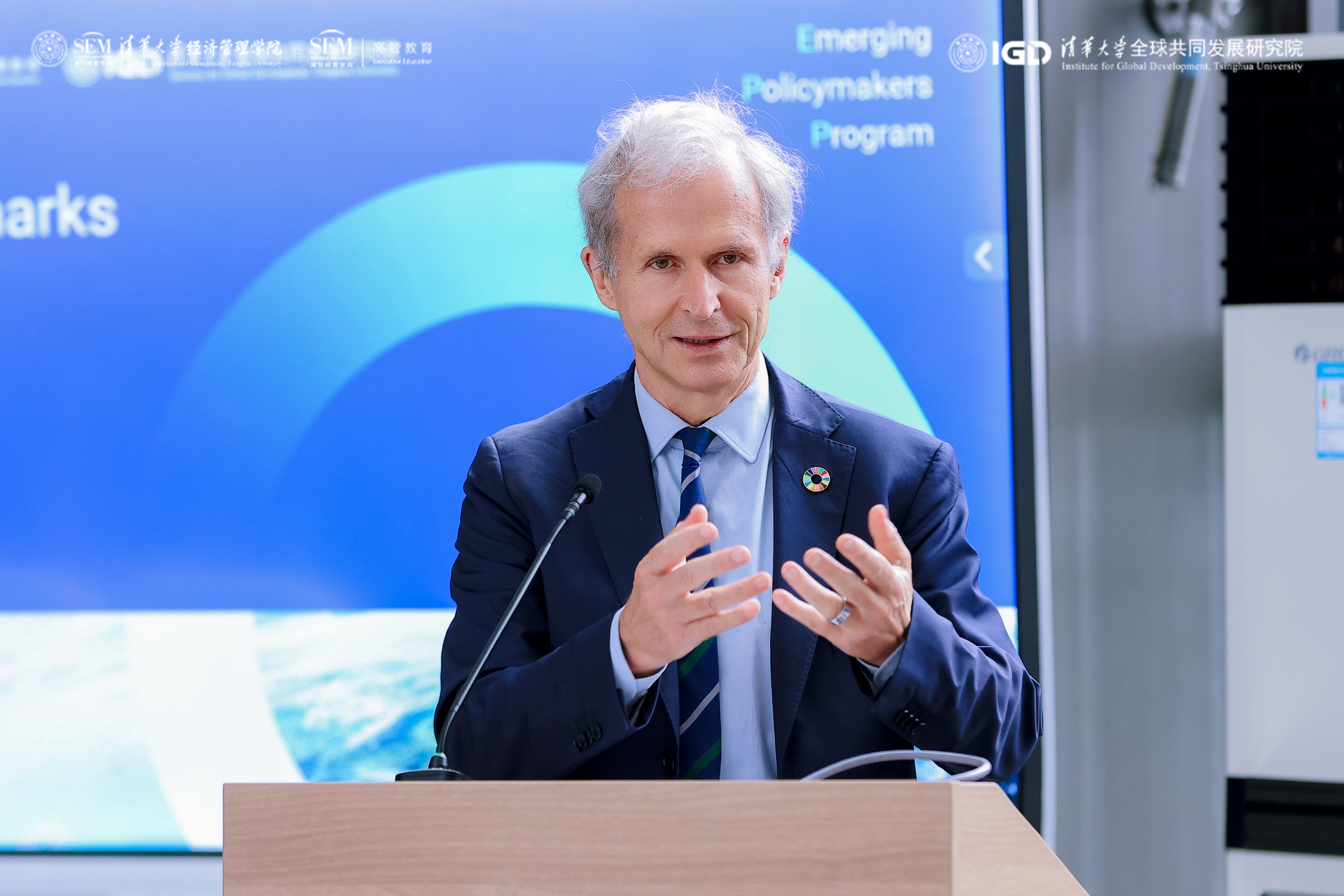
Erik Berglof delivers a speech at the launch ceremony of 2026 EPP, May 22, 2026.
In the opening remarks, Erik Berglof celebrated the EPP's multi-institutional partnership — encompassing Tsinghua University, the London School of Economics, Stanford University, and AIIB — as a shared commitment to capacity building for climate action and sustainable development.
Berglof underscored that climate change is no longer a distant risk but a present reality, particularly for emerging and developing economies. He noted that the EPP creates a vital space for cross-country learning and collaboration, building a lasting community of policymakers equipped to translate global ambitions into practical, country-specific actions.
Reaffirming AIIB's deepened support for the program this year, he encouraged participants to exchange insights from their national contexts, forge lasting connections, and embrace the collective action needed to address the climate challenge.
The launch ceremony also featured remarks from two representatives who articulated both personal motivations and collective aspirations for the program.
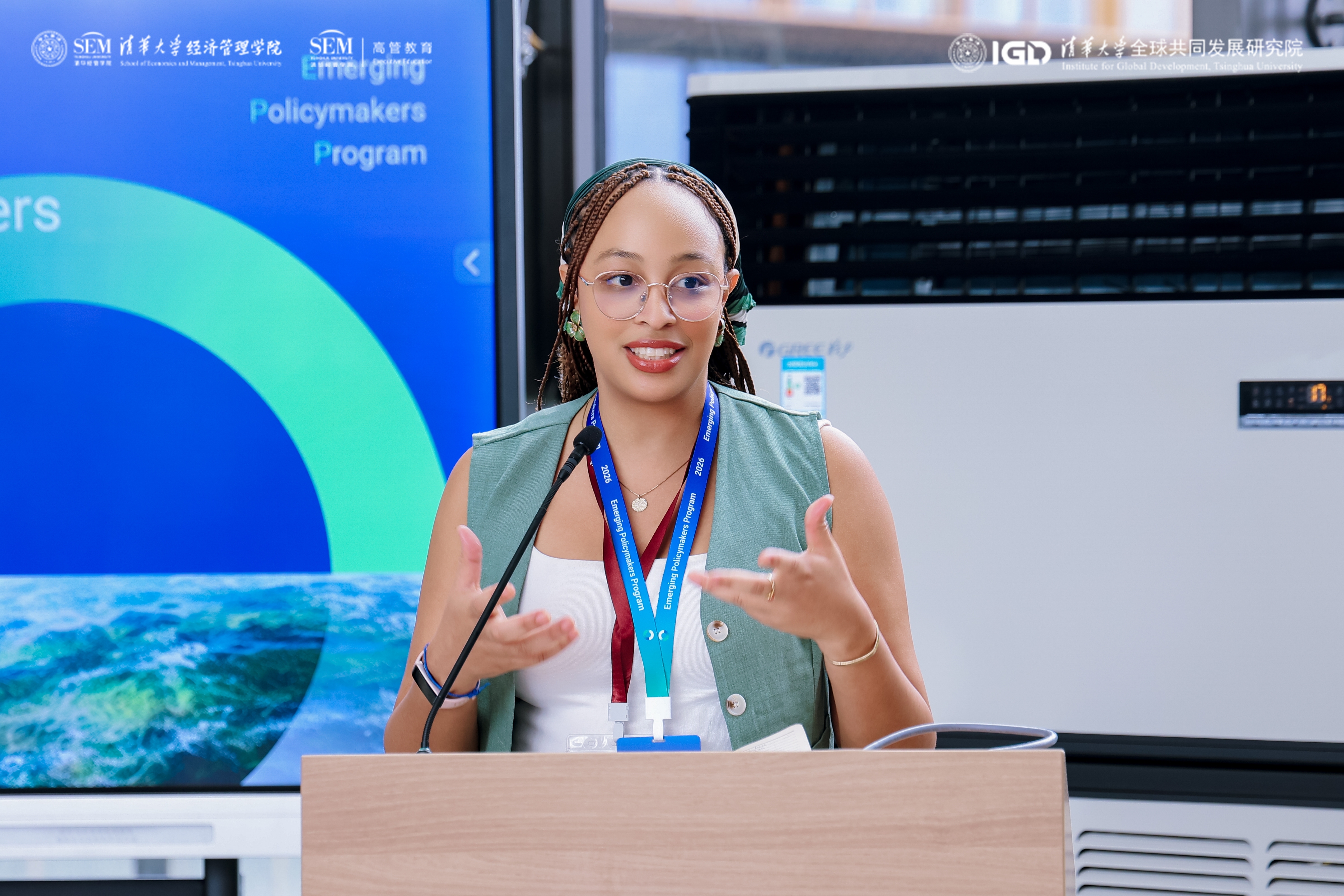
Nanny Santana Leal de Figueiredo from the Ministry of Health of Brazil, delivers a speech at the launch ceremony of EPP, May 22, 2026.
"No country can handle the impacts of climate change by themselves. We need to collaborate, we need to share knowledge, and we need to employ solidarity so that we can stay together in face of climate change," Nanny Santana Leal de Figueiredo from the Ministry of Health of Brazil said.
Figueiredo shared a deeply personal story illustrating the transformative power of education: "For my family and I, education is the most powerful tool for social development. My grandmother was illiterate, and in the span of a generation, she has her granddaughter here with you today to discuss resilient policies for green infrastructure." She added that "knowledge, conversations, and public policy that is equitable, can change lives, and it's what is required to face climate change."
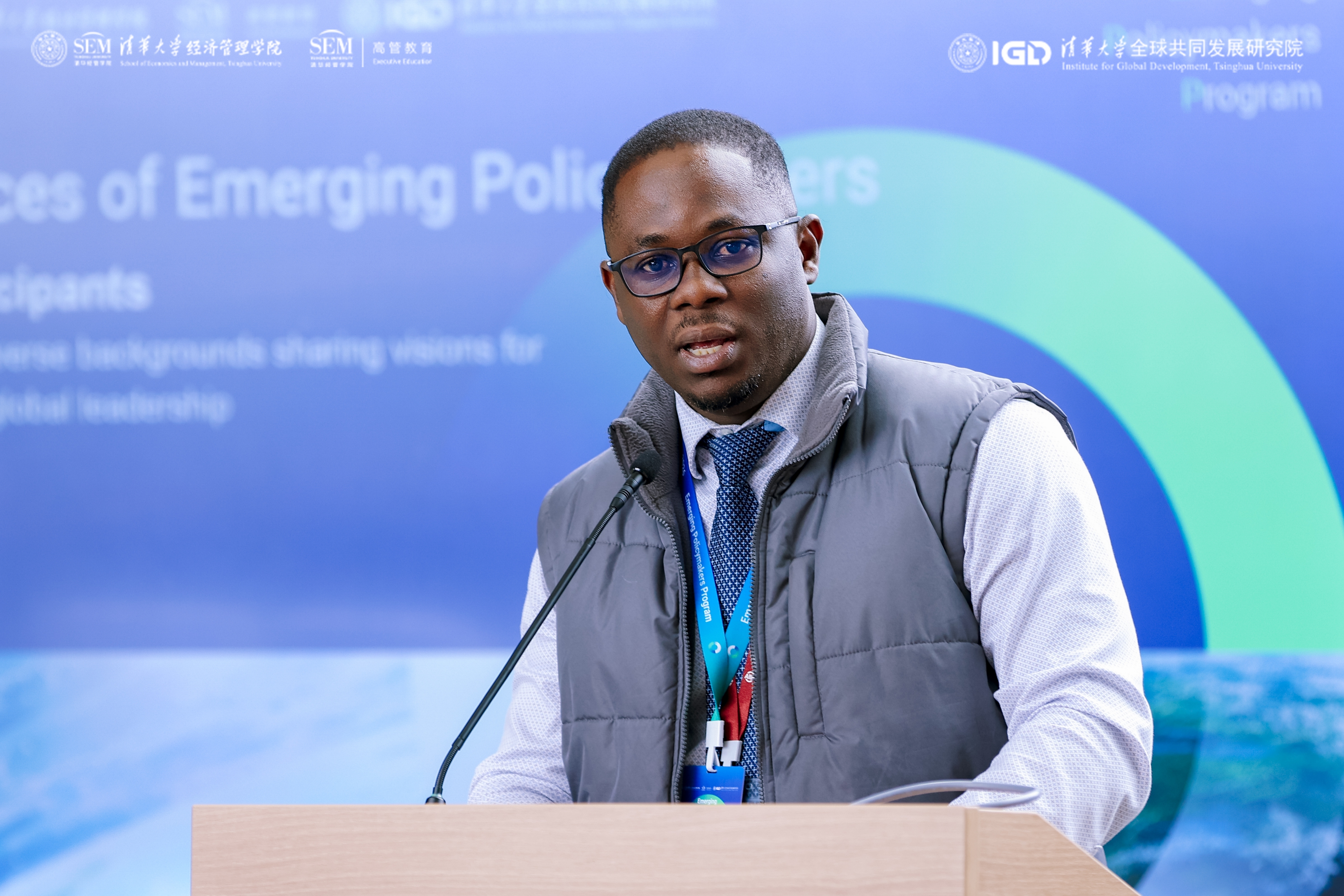
Dennis Wolanyo Kwame from the Ministry of Finance of Ghana delivers a speech at the launch ceremony of EPP, May 22, 2026.
"At the end of the day, I hope to share, learn from everybody else so that we could make this world a better place. Peer learning is one key attribute of what I hold as a policymaker," Dennis Wolanyo Kwame from the Ministry of Finance of Ghana said.
Kwame revealed a meaningful personal connection to Tsinghua: "Some nine or ten years ago, I applied to Tsinghua University for my master's degree. Because of one or two reasons, I couldn't come. So when I heard about this program, I was actually happy and really wanted to be part of it." He emphasized the importance of building sustainable networks: "I look forward to creating lasting networks that would go beyond the years of the program but actually help inform policy formulation and implementation in our various countries. Examples, lessons and peer learning – these are key attributes of what I hold as a policymaker."
On the same day, EPP participants joined AIIB in an event marking the International Day for Biological Diversity 2026, under the theme "Building Nature into Infrastructure – Creating Opportunities for Biodiversity and Resilience." The event brought together representatives from multilateral development banks and other organizations to discuss the role of nature-based solutions and "Nature as Infrastructure" approaches in strengthening resilient and sustainable infrastructure development.
The event reinforced the shared emphasis of Tsinghua SEM and its partners on building policy capacity, advancing sustainable development, and supporting long-term resilience in Asia and beyond. Through continued collaboration with AIIB and the global academic community, Tsinghua SEM remains dedicated to developing the next generation of policymakers who will drive the transition to a more sustainable and inclusive future.
"Let us work together to transform climate commitments into action,"Bai Chong-En concluded.
About EPP
The 2026 EPP combines in-person learning at Tsinghua University and field studies across China with online coursework delivered by partner institutions. The curriculum covers climate science, environmental governance, low-carbon transition, green industrial policy, innovation, and sustainable infrastructure.
Over the next four weeks in China, participants will engage with world-class faculty on topics ranging from carbon neutrality and green infrastructure to financial technology and public policy. They will also participate in an intensive week-long case study workshop led by Stanford professors, designed to sharpen analytical skills and deepen understanding of how policy decisions are made in complex real-world settings.
The in-depth field studies in Shanghai, Shenzhen, and Jiangmen of Guangdong Province will allow participants to see firsthand how China is advancing sustainable development on the ground. Following the one-month on-campus program, online courses from July to August will be delivered primarily by faculty from the London School of Economics and Political Science.
The EPP is jointly implemented by Tsinghua SEM's Executive Education Center and Tsinghua University Institute for Global Development. The program was successfully piloted in 2025 and expanded for 2026, reflecting the strong commitment of AIIB and its academic partners—including Tsinghua SEM, the London School of Economics and Political Science, and the Leadership Academy for Development at Stanford University's Freeman Spogli Institute for International Studies—to capacity building, climate finance, and fostering policy dialogue among emerging and developing economies.
Source: Executive Education Center
Editor: Ren Zhongxi

 Latest News