A masterclass and roundtable on the opportunity and outlook of China-Mongolia economic and financial cooperation were held at the National University of Mongolia, Ulaanbaatar, the capital of Mongolia, on May 9, 2026.
The events were jointly organized by the EMBA Programs and the Executive Education Center of the Tsinghua University School of Economics and Management (Tsinghua SEM). They centered on the opportunity and outlook of China-Mongolia economic and financial cooperation, and attracted highly accomplished individuals from the two countries' academic communities, governments, and financial and business sectors.
The participants exchanged views on how to enhance China-Mongolia economic and trade exchanges and increase cross-border financial cooperation. The events also enhanced cooperation between Tsinghua University and Mongolian higher education institutions and society, an aim of the recent visit to Mongolia by a Chinese delegation led by Tsinghua University's Party secretary Qiu Yong.
Shen Minjuan, Chinese ambassador extraordinary and plenipotentiary to Mongolia, opened the masterclass and delivered a speech, followed by He Ping, associate dean of Tsinghua SEM. Lu Yao, associate dean of academics of Tsinghua University's Schwarzman College and professor of Tsinghua SEM's Department of Finance, made a keynote speech. Amgalan Battulga, director-general of the Financial Stability Department, Bank of Mongolia, N. Batnasan, dean of the Business School, National University of Mongolia, and Yang Shumei, chief representative of Ulaanbaatar Office, Bank of China, along with representatives from the Chinese and Mongolian academic communities, governments, financial institutions and business sectors, attended the masterclass. An Jing, assistant to the director of the EMBA Programs of Tsinghua SEM, hosted the event.
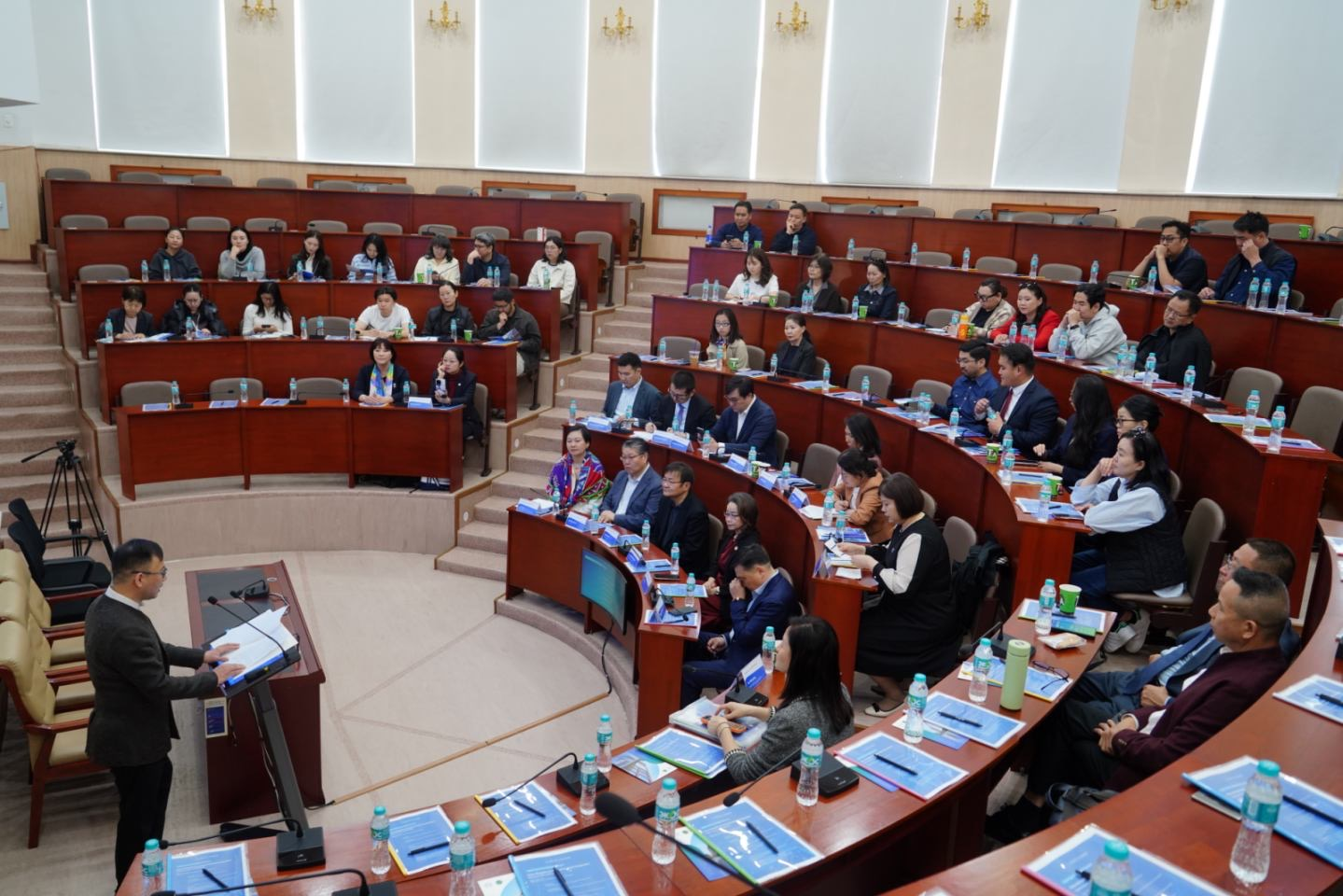
A masterclass is held at the National University of Mongolia on May 9, 2026.
In her opening remarks, Shen Minjuan used three words to describe her understanding and expectations for China-Mongolia relations: friendship, resilience and future. She pointed out that a good rapport between the Chinese and Mongolian people is the cornerstone of China-Mongolia ties, and the involvement of people from all walks of life will give new momentum to a comprehensive strategic partnership between the two countries. Tsinghua University has a long-standing relationship with Mongolia, she noted, and its cooperation with the country will provide more intellectual support for the development of China-Mongolia ties and make the two countries' relations more resilient and sustainable. Looking ahead, Shen said she expected China's 15th Five-Year Plan and the establishment of the Inner Mongolia Pilot Free Trade Zone to create great opportunities for both China and Mongolia. She said Tsinghua SEM's international programs are producing business leaders with a global vision who will seize these opportunities and help turn possibilities into reality.
In his speech, He Ping said Tsinghua University and SEM attach great importance to seeking global collaboration opportunities and developing high-level talents, and have facilitated international communication and balanced regional development through educational cooperation. He pointed out that against the backdrop of increasing China-Mongolia trade, Tsinghua SEM, as a world-class business school with global outreach, will commit to developing innovative talents with a global vision and cross-cultural communication skills, and will promote academic exchanges, industry collaboration and interactions between young people. He said the forum will provide an opportunity for building consensus and expanding collaboration, and inject fresh energy into Sino-Mongolia economic and financial cooperation and high-quality regional development.
Lu Yao's keynote speech focused on China's macroeconomic trends and the opportunities and risks of equity investment in 2026. She provided insights into China's economic outlook against the backdrop of structural transformation and policy optimization. She said the Chinese economy will maintain healthy growth, and technological innovation, high-end manufacturing, artificial intelligence and green transition will become the driving forces of high-quality development. Policy support, industrial upgrading and companies' profitability fixing measures will create new opportunities for growth in the Chinese equity market, Lu said, adding that investors should pay attention to global economic fluctuation, geopolitics and structural risks. She also said that China and Mongolia can expand collaboration in green energy, industrial chain collaboration, regional connectivity and some other areas to achieve a win-win situation and foster development for both countries.
Following the masterclass was a roundtable centered on new opportunities for China-Mongolia economic and financial cooperation: challenges, transformation and win-win pathways. The roundtable was moderated by Lu Yao. Amgalan Battulga, Yang Shumei, Naranbat Battulga, founder and chairman of Hipay who is part of TIEMBA 2027 class, and Temuulen Maidar, a Schwarzman fellow from Apeiro LLC, took part in the roundtable. They discussed macroeconomic trends, financial regulations in Mongolia, China-Mongolia trade, and finance-industry collaboration, as well as digital payment, regional connectivity, green development and young talent development.
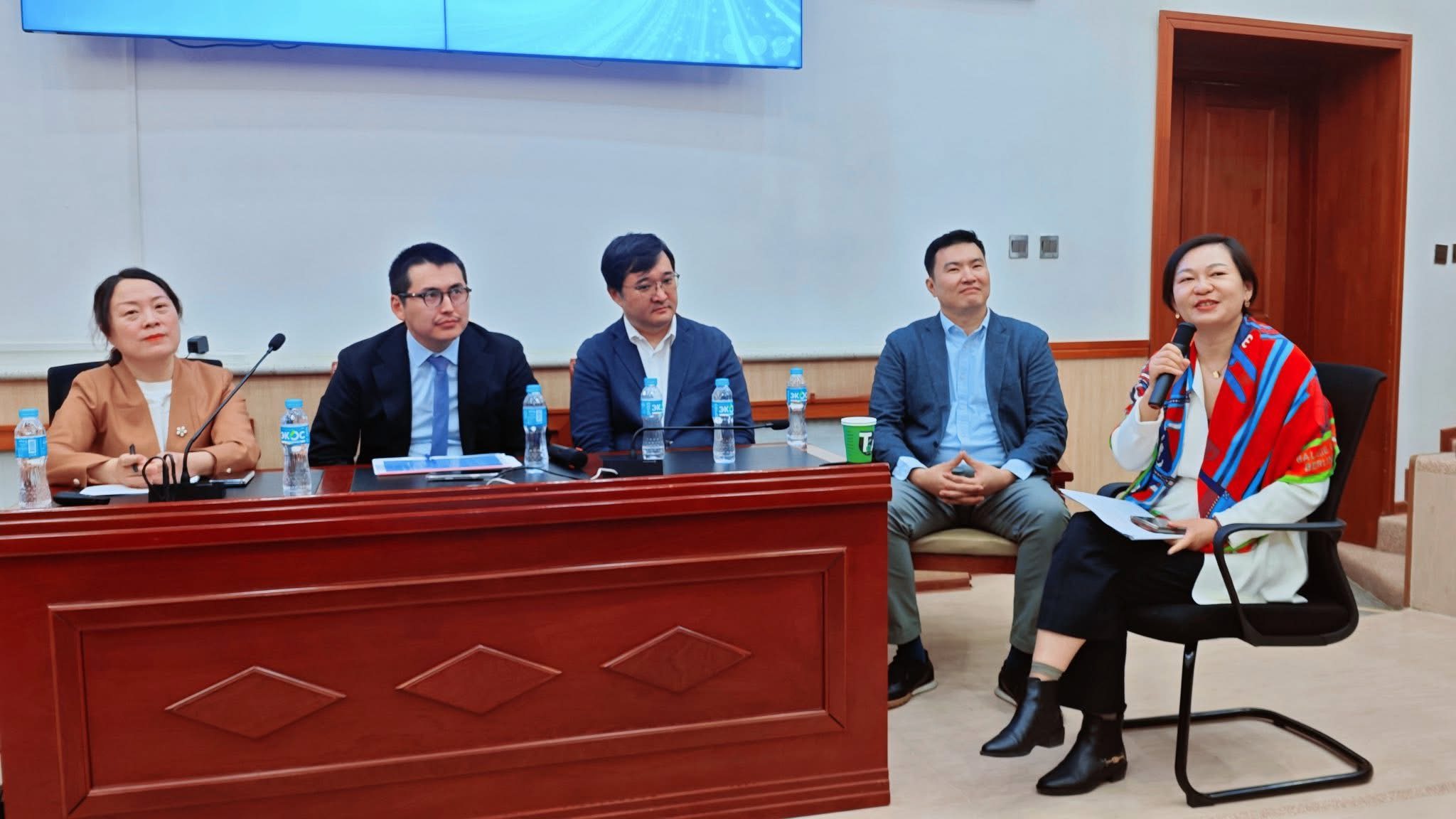
A roundtable is held at the National University of Mongolia on May 9, 2026.
The events provided a high-level communication platform for Chinese and Mongolian academic communities, financial sectors and industrial communities, and deepened the consensus between the two sides on cooperation in economic and financial matters, talent development and youth exchanges. In the future, Tsinghua SEM will continue to use its global outreach and academic and research strengths to serve China's high-level opening-up strategy. It will keep promoting exchanges and cooperation between China and the countries of the Belt and Road Initiative, including Mongolia, in education, technology, finance and industry, and facilitate cross-region resource sharing and collaborative innovation. Through its international programs such as the Tsinghua-INSEAD EMBA program and the executive education program, Tsinghua SEM will equip more talents with a global vision, innovation ability and a sense of social responsibility, and make more contributions to the development of China-Mongolia friendly relations, the deepening of regional economic cooperation, and shared prosperity.
Source: EMBA Programs
Editor: Ren Zhongxi

 Latest News